
Last updated November 16, 2026
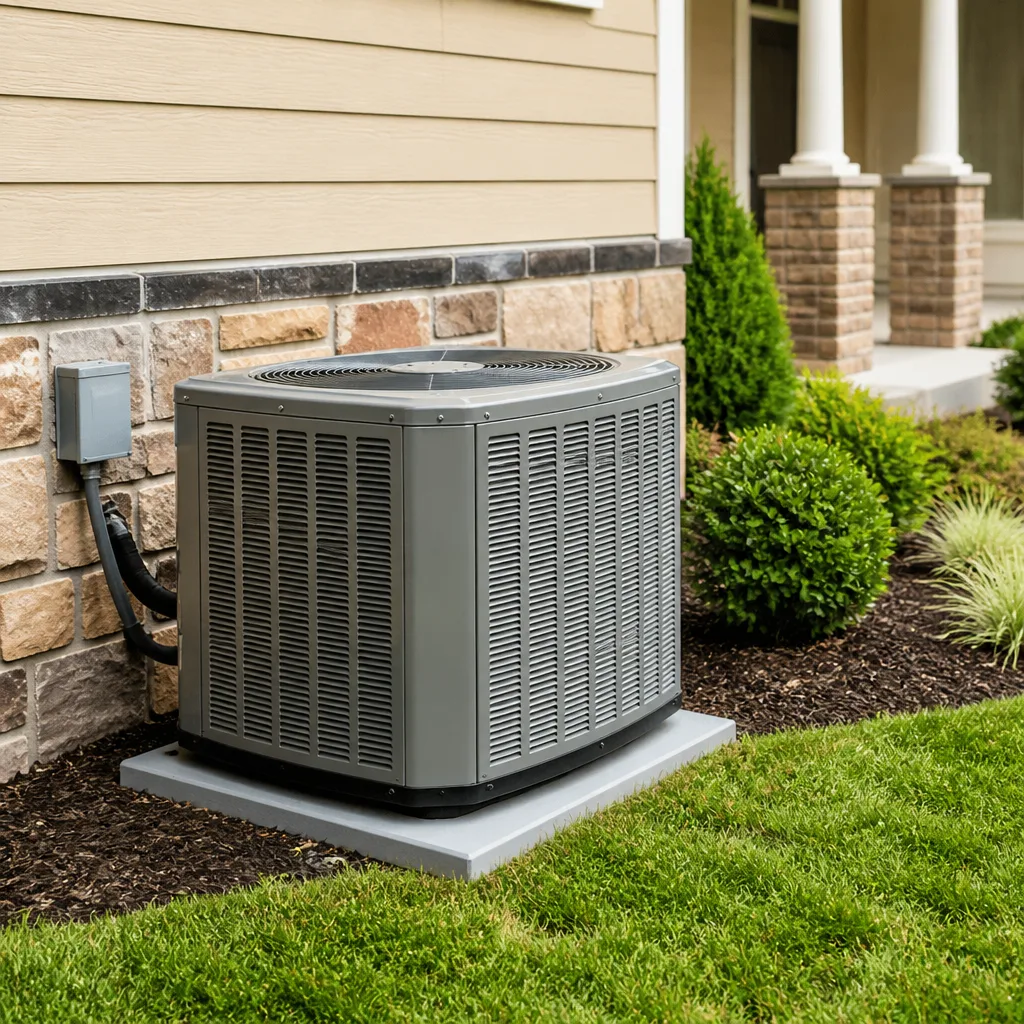 AC repair
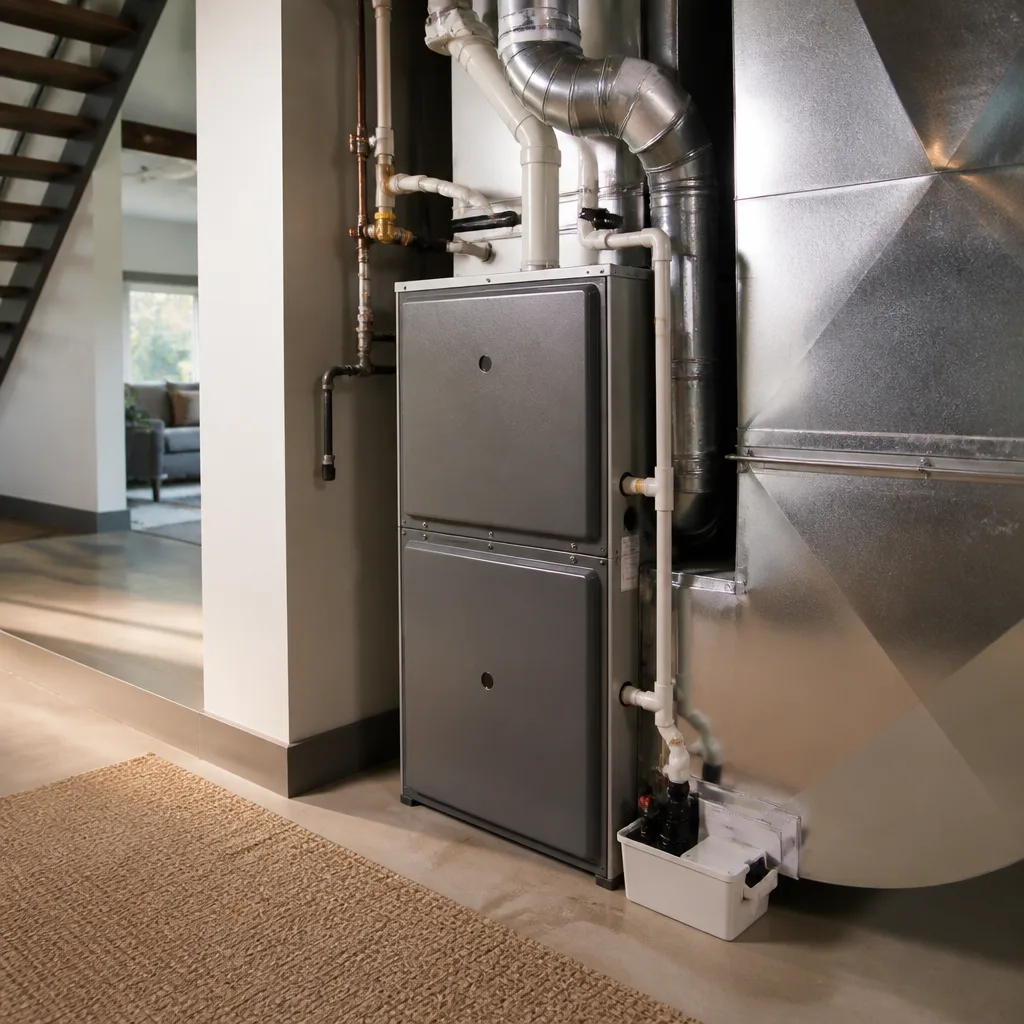 Furnace & heating
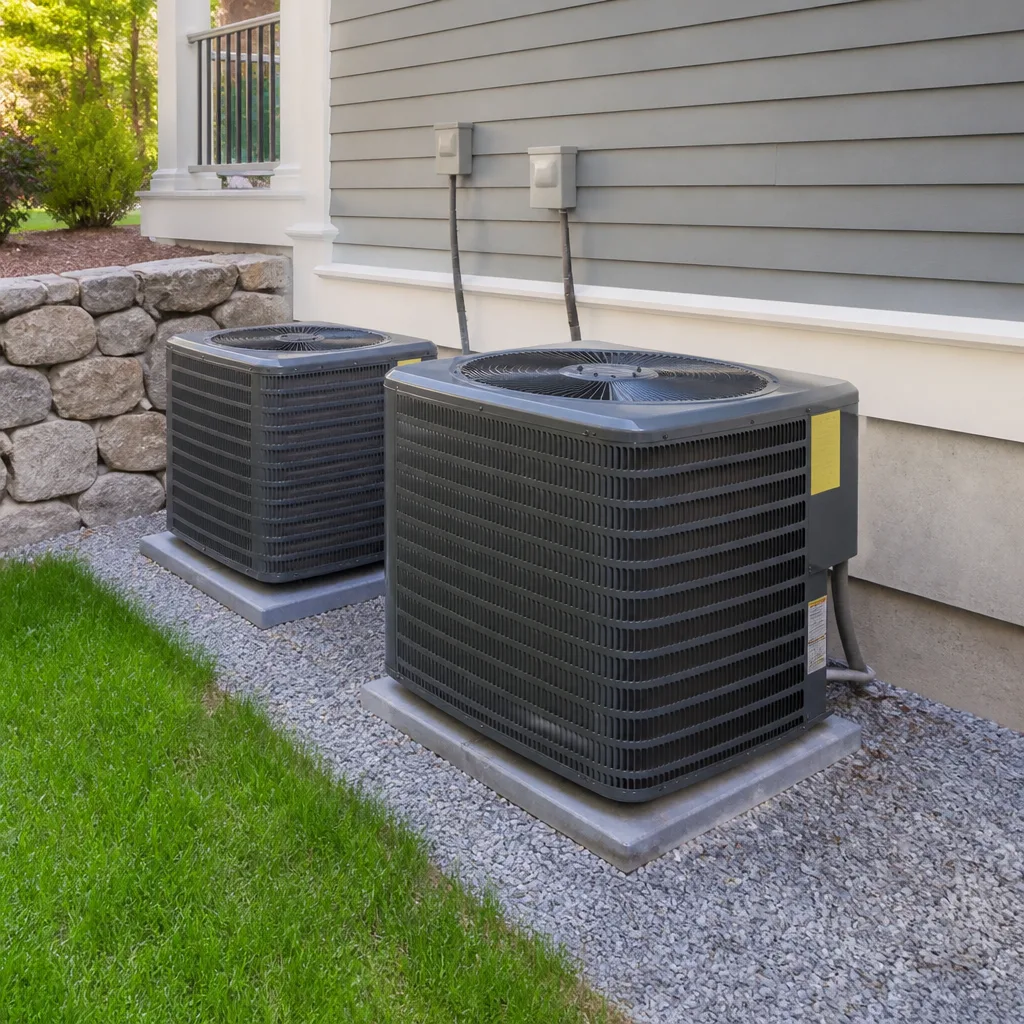 Heat pumps
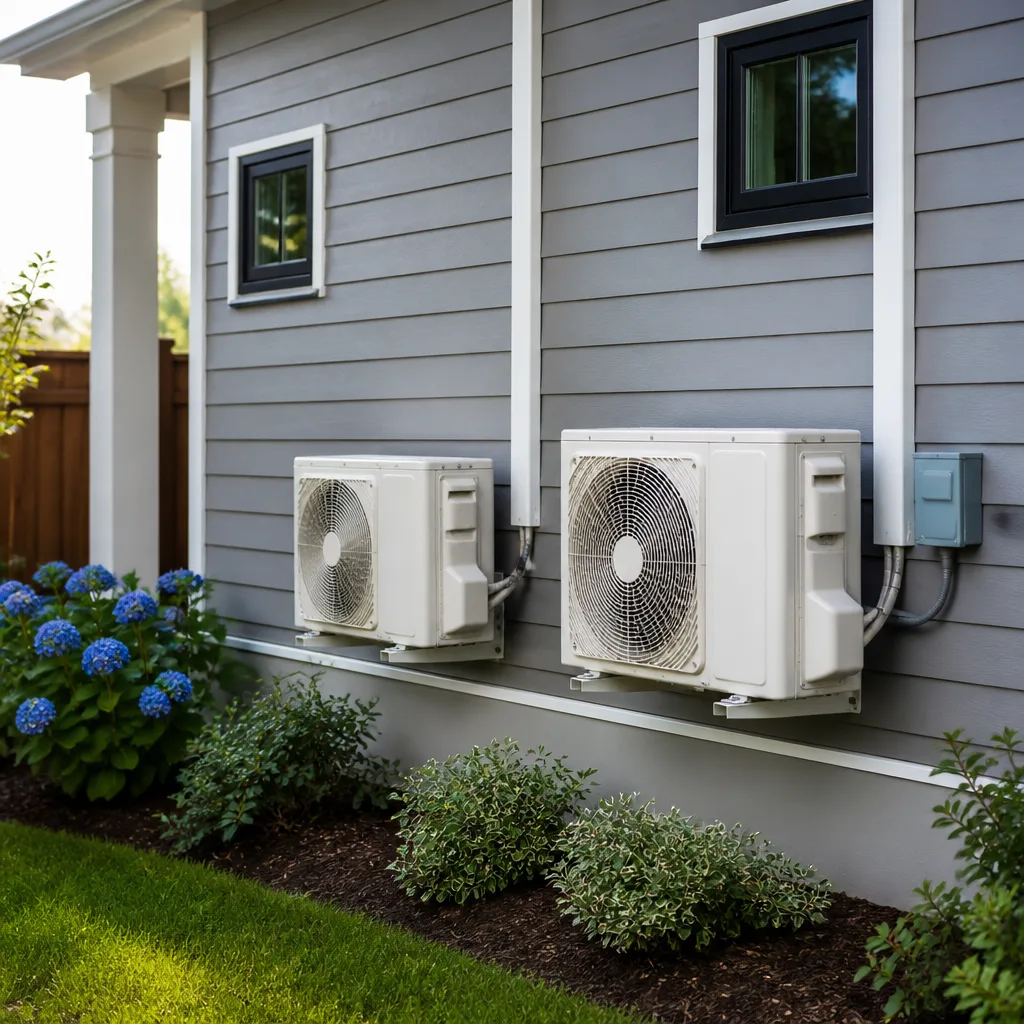 Ductless mini splits
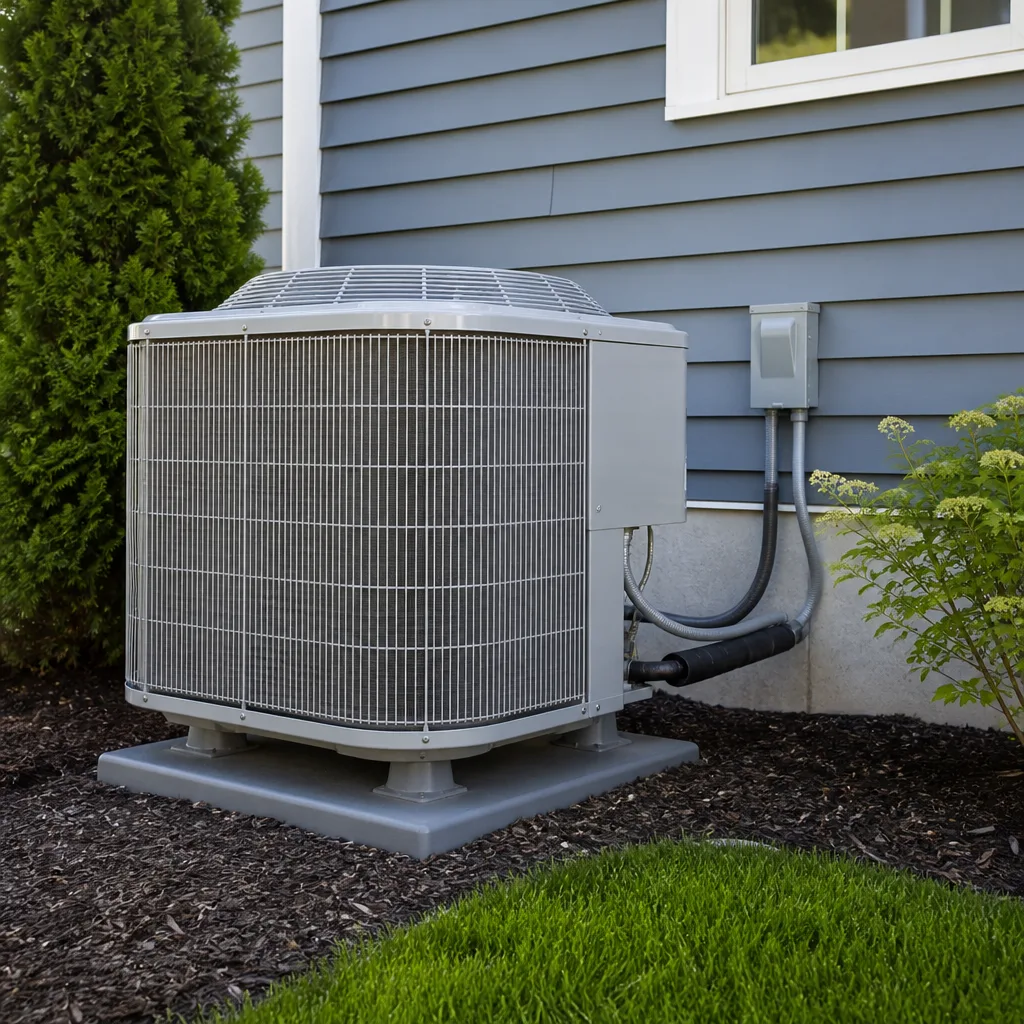 Carrier
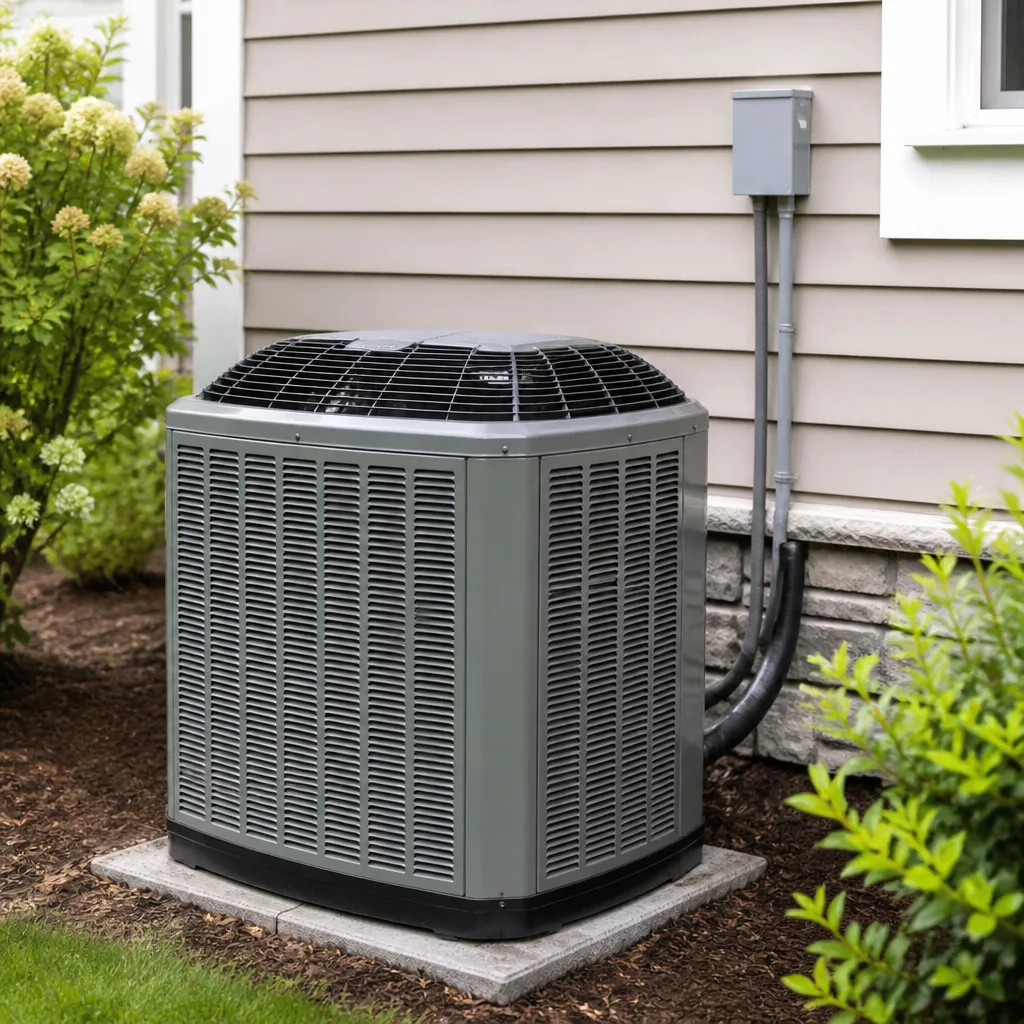 Trane
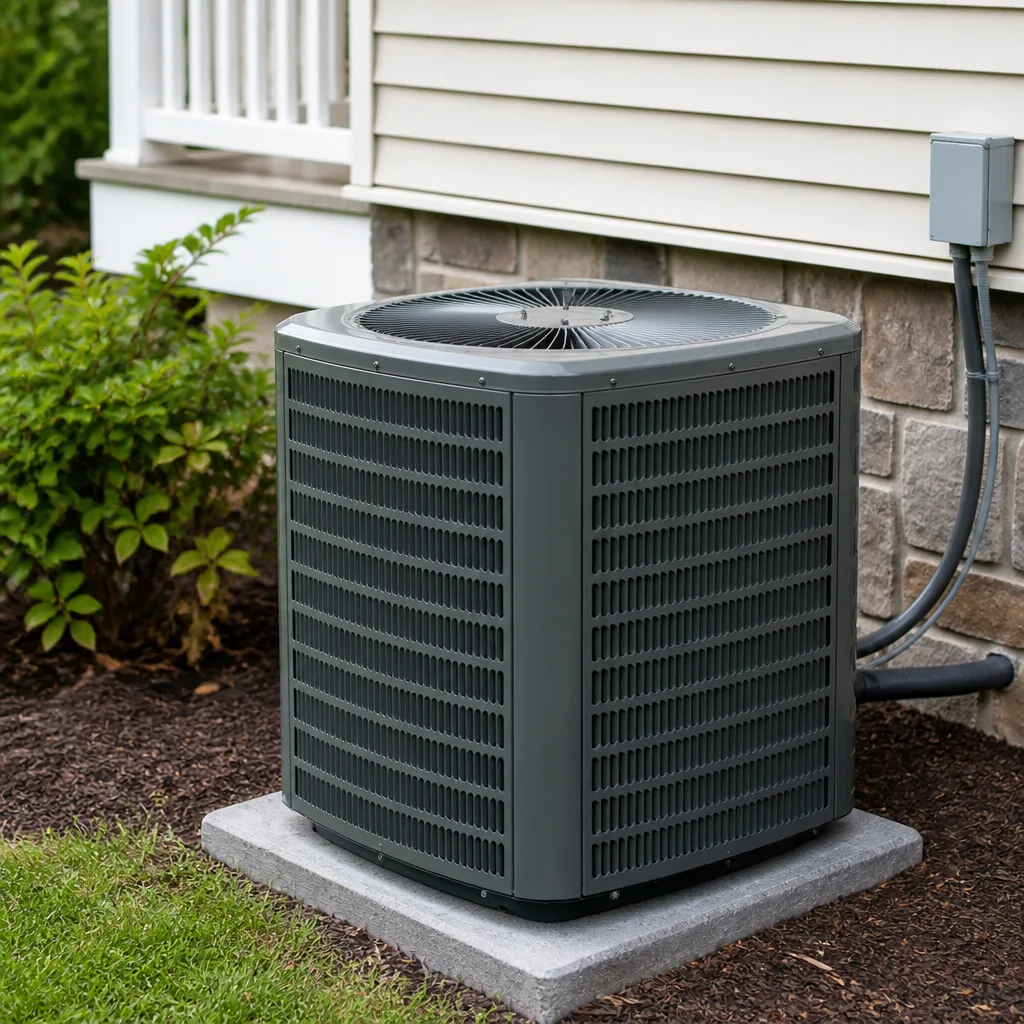 Goodman
Seasonal tune-up and full diagnostic on your Carrier, Trane, or Goodman system - readings shown to you before any repair is proposed
Diagnosis first, numbers second - you approve the repair price before a single part goes in.
Get your free estimateSeasonal HVAC Care for Inglewood: Year-Round Homeowner’s Guide
If you’re following a seasonal HVAC checklist written for a midwestern climate, you’re probably prepping your AC in April when you should be doing it in February, and neglecting your furnace filter in October during the exact month Santa Ana winds push the most particulate through your system. Inglewood doesn’t run on four seasons. It runs on a compression season, a heat spike window, a Santa Ana risk period, and a long marine layer stretch – and each one puts a different demand on the equipment in your home. This guide replaces the generic spring-and-fall routine with a calendar built around how this city’s weather actually cycles.
Quick Answer
Seasonal HVAC care in Inglewood follows a four-point calendar rather than a spring/fall split: service the AC in February before marine layer season, clean the outdoor unit and check the furnace filter in May before peak heat, change filters and test heat in October before Santa Ana winds arrive, and replace the furnace filter and run the heat in December before it carries the heaviest load. The single biggest factor unique to this city is air quality along the LAX corridor, which should drive your filter schedule more than the calendar does.
Styles & brands we work with
- AC repair
- Furnace & heating
- Heat pumps
- Ductless mini splits
- Carrier
- Trane
- Goodman
Table of Contents
- Why Inglewood’s Climate Doesn’t Fit a Standard HVAC Schedule
- February: AC Prep Before Marine Layer Season
- May: The Outdoor Unit Task That Has to Happen First
- July: Peak Heat and the Afternoon Spike
- October: Santa Ana Winds and Filtration
- December: Furnace Season Arrives Suddenly
- Filters and Air Quality: What MERV Rating Fits Inglewood Homes
- Thermostat Programming for Marine Layer Mornings
Why Inglewood’s Climate Doesn’t Fit a Standard HVAC Schedule
The standard seasonal HVAC calendar was built for a place with a real winter. It assumes a long heating season, a short cooling season, and a spring and fall where the system sits mostly idle. Inglewood runs nearly the opposite way. Cooling season is long. Heating season is short and compressed. There’s no true idle period where you can safely forget the system exists. That mismatch is why so many homeowners in Inglewood end up doing maintenance at the wrong time – or skipping it because the calendar they found online doesn’t match their life.
Two forces shape the local cycle more than temperature does. The first is the marine layer, which sits over the basin through late spring and early summer and keeps mornings cool and damp before burning off into an afternoon warm-up. That daily swing is hard on a thermostat’s programming and easy to misjudge. The second is the Santa Ana wind pattern, which arrives in fall and pushes dry, particulate-heavy air toward the basin. Both patterns are regular enough to plan around.
The practical result is that Inglewood’s HVAC year has four load-bearing checkpoints, not two:
- Late winter (February): the AC gets its real service before cooling demand starts, not in April.
- Late spring (May): the outdoor unit gets cleaned before the debris season peaks and before the first heat of the year.
- Early fall (October): filtration gets attention during the Santa Ana window, and the furnace gets a first test run.
- Early winter (December): the furnace filter gets renewed right before the system carries most of its annual load.
Homeowners who’ve owned a home in this city for years often already know this in their bones. If you’re newer to Inglewood, the calendar below is the one to follow.
February: AC Prep Before Marine Layer Season
February is the correct month to get your cooling system ready in Inglewood, not April or May. By April the marine layer season is already underway, mornings are damp, and homeowners start testing the AC to chase the afternoon warmth. If something is going to fail on the first real hot day, February is when you want to find it – not on the afternoon you need the system most.
A February AC service visit covers:
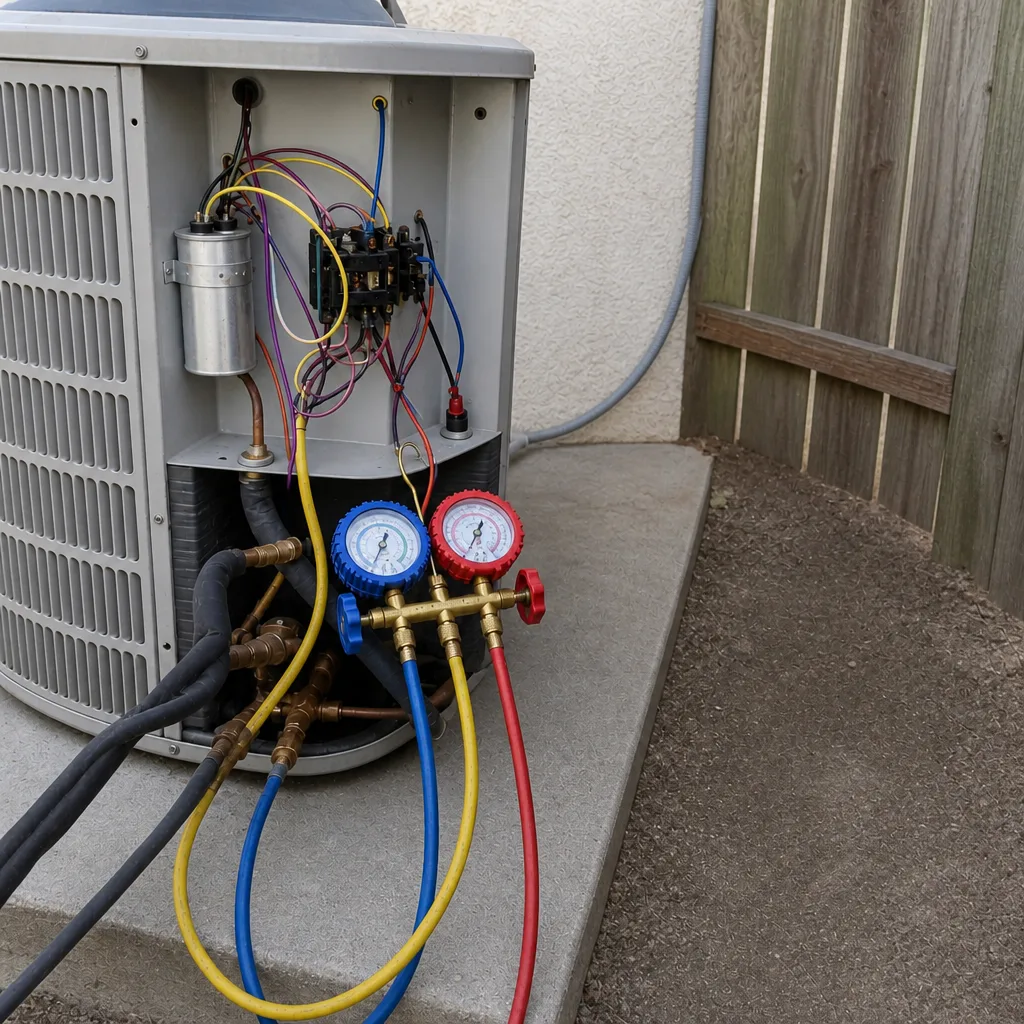
- Refrigerant charge check. Low refrigerant is a slow problem, and it’s far easier to catch in February than during a heat wave. If the charge is off, the technician diagnoses the cause rather than simply topping it up – a system that needs refrigerant every year has a leak somewhere.
- Capacitor and contactor inspection. These are the two parts most likely to fail first on a system that has sat through winter. Both are inexpensive to replace before they fail and disruptive when they fail in July.
- Condensate drain check. Damp spring mornings followed by warm afternoons mean the system will run condensate earlier than most homeowners expect. A partially clogged drain that goes unnoticed in February shows up as water around the air handler in May.
- Coil inspection. Indoor and outdoor coils both pick up dust during the cooler months while the system is mostly off. February is the natural time to check condition and confirm airflow is still clear.
This is the month when a technician can actually spend time on diagnostics instead of triage. If your system is a Carrier, a Trane, or a Bryant, the service points are the same – the difference is in knowing the specific control boards and safety switches on the equipment you own. We work on your brand, which means the technician arriving at your home already knows what they’re looking at.
If February inspection turns up a fault on a unit that’s already struggling, the comparison between a repair and a new system is worth having before summer. Our AC installation work starts with sizing, not sales – the installation is only as good as the load calculation behind it.
May: The Outdoor Unit Task That Has to Happen First
The single most important outdoor task in Inglewood happens before May, and it’s not the filter change. It’s clearing the outdoor condenser coil and the space around the unit. Local vegetation and the timing of spring growth mean debris accumulates on and around outdoor units faster in late spring than any other time of year, and the marine layer keeps some of that debris damp and stuck to the fins.
Here’s why this matters more than most homeowners realize. A condenser coil only works if air can pass through it freely. When the fins are packed with dry leaf matter, pollen, and fine dust, the system still runs – it just runs hotter and less efficiently, and the compressor works harder than it was designed to. A system that’s already borderline on a hot afternoon crosses into failure at the exact moment you need it most.
What to do before May arrives:
- Clear the perimeter. Keep a couple of feet of clear space around the outdoor unit – no stored items, no planters, no stacked wood, no pool toys.
- Check the fins from the side. If you can see visible debris between the fins, the coil needs a proper cleaning. Rinsing from the wrong angle can push dirt deeper into the fins, so this is best left to a technician with the right equipment.
- Look for damage to the fan blades and top grille. Branches and windblown debris can bend the grille or crack a blade, which throws the fan off balance and stresses the motor.
- Confirm the disconnect switch and electrical connections are sound. A loose connection found in May is a safe connection found in May. This is a check, not a repair you should attempt yourself.
May is also the right month for a first full AC run – not a long test, just enough to confirm the system will start cleanly and cool efficiently when the first hot spell arrives. If it doesn’t start, you’ve still got weeks before it matters. If you’d rather hand that test to someone who knows AC repair in Inglewood the way we do, that’s exactly the kind of visit we handle before the summer rush.
July: Peak Heat and the Afternoon Spike
By July the marine layer morning and the afternoon heat spike are both in full swing, and that daily swing is what actually drives cooling demand. A house that reads 68 degrees at 7am and pushes toward the upper 80s by mid-afternoon inside is working its cooling system harder than a house in a steadier climate – not because the peak is extreme, but because the swing is large and repeated every day.
July care is about reducing load rather than adding maintenance. The filter should already be clean from the May visit, and the outdoor unit should already be clear. What matters in July is:
- Closing up the house in the morning. Shut windows and draw shades before the marine layer burns off. A house that’s already cool when the afternoon peak hits needs less from the AC to stay comfortable.
- Setting back the thermostat during the day – but not too far. A large setback sounds efficient, but in a well-insulated house the recovery can take longer than the setback saved. A moderate setback that still lets the system keep up is more efficient than a deep one that forces it to run wide open at 5pm.
- Checking the return air path. Blocked returns – a piece of furniture over a grille, a rug, a stack of boxes – pull harder on the system without any obvious symptom. Walk the house and confirm every return is clear.
- Listening for changes. A new rattle, a new click, a shorter or longer run cycle – these are the symptoms homeowners notice first about their own equipment. A change in how your system sounds on a hot afternoon is worth a call, not a wait.
The most common July failure we see is a system that’s been marginal since May and gives out on the hottest day. If cooling is weak or the system runs continuously without reaching the set temperature, don’t wait for it to fail – call us and we’ll diagnose it. Repair is often the right answer on a system with plenty of service life left, and we’ll tell you where the honest line is.
October: Santa Ana Winds and Filtration
October is the month that separates an Inglewood homeowner who knows the local climate from one who doesn’t. The Santa Ana wind pattern pushes dry, particulate-heavy air across the basin, and for a home with a heating and cooling system running through a filter, that means filtration matters more in October than at any other point in the year. This is the month to change the filter if you change it once – and the month to pay attention to air quality advisories when you’re deciding whether to change it more often.
October care covers:
- Filter replacement timed to air quality. When local air quality advisories are active during a Santa Ana event, the filter loads faster. A filter that would normally run two or three months can need replacing earlier. Check the filter by holding it up to the light – if you can’t see through it, it’s doing its job too well and needs replacement.
- Duct and grille inspection. Wind-driven debris can enter the system through gaps, and so can leaves and dust that find their way into return plenums. A check in October catches this before heating season pushes it through the house.
- First test run of the furnace. Before the first real cold snap, run the heat for a few minutes on a mild evening. If it smells like burning dust, that’s typically the dust that settled on the heat exchanger over the idle months burning off – but it can also indicate a problem. If the smell doesn’t clear after a few minutes or is sharp rather than dusty, shut the system down and have it looked at.
- Thermostat mode check. Confirm the thermostat is set to heat and not cool before the first cold evening, and that the schedule actually reflects what you want in fall rather than what you set in June.
If your furnace doesn’t fire on that first test run, don’t wait until December to schedule. A furnace that fails in October is easy to service; a furnace that fails in December during the first cold snap is competing with every other household calling for help on the same day.
December: Furnace Season Arrives Suddenly
Furnace maintenance timing in Inglewood differs from anywhere with a long, gradual cooling season. In this city, the furnace often sits mostly idle through the warm months and then carries most of the annual load through a short, sharp winter. There’s no long shoulder season where the system slowly proves itself. It goes from off to on and back to periodic use, and the first cold snap can arrive without much warning.
December is the month to make sure it’s ready:
- Replace the filter before load. This is the most important furnace filter change of the year in Inglewood. The furnace will push a lot of air through that filter in the coming months, and a filter that was fine in September may not be fine now.
- Confirm airflow at every supply grille. Walk the house with the heat running and confirm each room is receiving air. One room that’s noticeably weak points to a damper issue, a duct problem, or a blocked line – worth knowing before the cold settles in.
- Have the system inspected if it hasn’t been this year. Combustion safety, heat exchanger condition, burner flame pattern, and flue operation are all checks a technician should carry out on a gas furnace. This is a genuine safety matter – do not attempt it yourself. A cracked heat exchanger or an improperly vented flue is not a problem you want to discover by symptoms.
- Check carbon monoxide alarm function. Every home with a gas furnace should have one, and it should be tested annually. If you don’t have an alarm near the sleeping areas of your home, this is the month to fix that.
- Note the system’s behavior. A furnace that short-cycles, starts slowly, makes a clicking sound, or produces uneven heat is telling you something. December is the right month to act on that before a February cold snap catches the system mid-failure.
If December inspection turns up a fault, our furnace repair service is scoped to extend a furnace with service life remaining. When repair no longer makes financial sense, we tell you that plainly. Replacement gets its own separate scope – no forced upgrade, no pressure to buy new when a repair is the honest answer.
Filters and Air Quality: What MERV Rating Fits Inglewood Homes
Air quality along the LAX corridor is the single biggest driver of filter change frequency in Inglewood, and it’s the one maintenance item homeowners most often get wrong. Two things matter: how often you change, and which MERV rating you choose. Both interact with the equipment in your home, and getting either wrong has consequences.
On frequency:
- Standard recommendation: every one to three months for most homes in Inglewood. Homes that sit within the direct influence of the LAX corridor should lean toward the shorter end of that range – three months maximum, and often closer to every 60 days.
- During Santa Ana events: expect faster loading. If local air quality advisories are active through the fall, check the filter midway through the cycle rather than waiting the full three months.
- Homes with pets or heavy indoor dust: shorter cycles still. A filter is cheap; a stressed blower motor is not.
On MERV rating:
- MERV 8: the safe baseline for most systems. It captures the bulk of particulate without placing much restriction on airflow. If your system is older or has marginal ductwork, this is usually the right choice.
- MERV 11: a reasonable step up for homes closer to the LAX corridor where filtration matters more. The trade-off is airflow restriction, so confirm the system can handle it before upgrading.
- MERV 13: effective filtration, but many residential systems in this city were not designed for the pressure drop a MERV 13 filter creates. Installing one in a system that can’t handle it can increase energy use, stress the blower, and reduce comfort. Don’t upgrade without a technician confirming your system’s static pressure can take it.
One practical rule: a filter that costs twice as much and loads the same way in the same timeframe isn’t buying you twice the protection. Match the rating to what your system can handle and change it on schedule. That’s the honest answer, and it’s the one that keeps the equipment healthy.
Thermostat Programming for Marine Layer Mornings
The marine layer creates a specific problem for programmable and smart thermostats in Inglewood: the morning temperature is often low enough that the thermostat wants to run the heat, and the afternoon is warm enough that it wants to run the cooling – sometimes within the same day. A poorly programmed thermostat will do exactly what you told it, which is exactly the wrong thing for your energy bill.
Here’s how to set a schedule that actually matches the local pattern:
- Use a wider deadband in the morning. Instead of a tight setpoint that demands heat at 62 degrees, set the morning heat target a few degrees lower so the system doesn’t fire up for the morning chill. You’ll rarely need it. If you do, a thermostat with a deadband of a few degrees will cycle less.
- Set a cooling setpoint that assumes an afternoon warm-up, not a morning one. A schedule that expects to start cooling by 10am wastes energy – by then the marine layer may still be holding the house cool. Set the cooling schedule to begin in the early afternoon.
- Switch modes seasonally, not daily. Leave the thermostat in heat or cool as the dominant season dictates. Auto mode has its place, but the marine layer pattern makes it cycle between heating and cooling more often than it needs to in spring and fall.
- Use a schedule that reflects the house, not the outdoors. A house with good thermal mass holds the morning cool into the afternoon and needs a later cooling start. A house with a lot of glass and a west-facing exposure heats up earlier and needs a different schedule. Your thermostat should be tuned to your house, not to a generic template.
- Check the schedule when the season changes. If you set your cooling schedule in June, revisit it in October and your heating schedule in December. A schedule that fits the marine layer season is wrong for Santa Ana season.
If your thermostat is a smart model and you don’t want to program it manually, most of them learn the pattern within a couple of weeks. But if the schedule keeps fighting you, it’s often a sign the thermostat is working correctly and the underlying problem is a system that can’t keep up – not a programming issue.
Common Mistakes to Avoid
- Following a spring/fall checklist written for another climate. Prepping the AC in April is a month or two late for Inglewood. The marine layer arrives before the calendar says “summer,” so the pre-season service needs to happen in February.
- Using a MERV 13 filter because higher sounds better. Many residential systems in this city were never sized for the pressure drop a MERV 13 creates. Higher MERV is not automatically better if your blower can’t push air through it.
- Ignoring the outdoor unit until summer. The May cleaning is the one that matters most. A condenser coil packed with spring debris reads as a failing system by July.
- Skipping the December filter change because the filter was fine in September. Inglewood furnaces carry most of their annual load over a short window. December is not the month to run an old filter.
- Ignoring a change in system sound. A new rattle or a shorter run cycle on your own equipment is the symptom you’ll notice first. It’s worth a call the same week, not the same month.
- Leaving the thermostat in auto through the marine layer season. Cycling between heat and cool every morning and afternoon wastes energy and stresses the system. Pick a season and set the mode accordingly.
- Ignoring carbon monoxide alarms. A gas furnace that runs for only a few months per year is exactly the kind of appliance that benefits from annual testing. Test the alarm every year.
See the difference
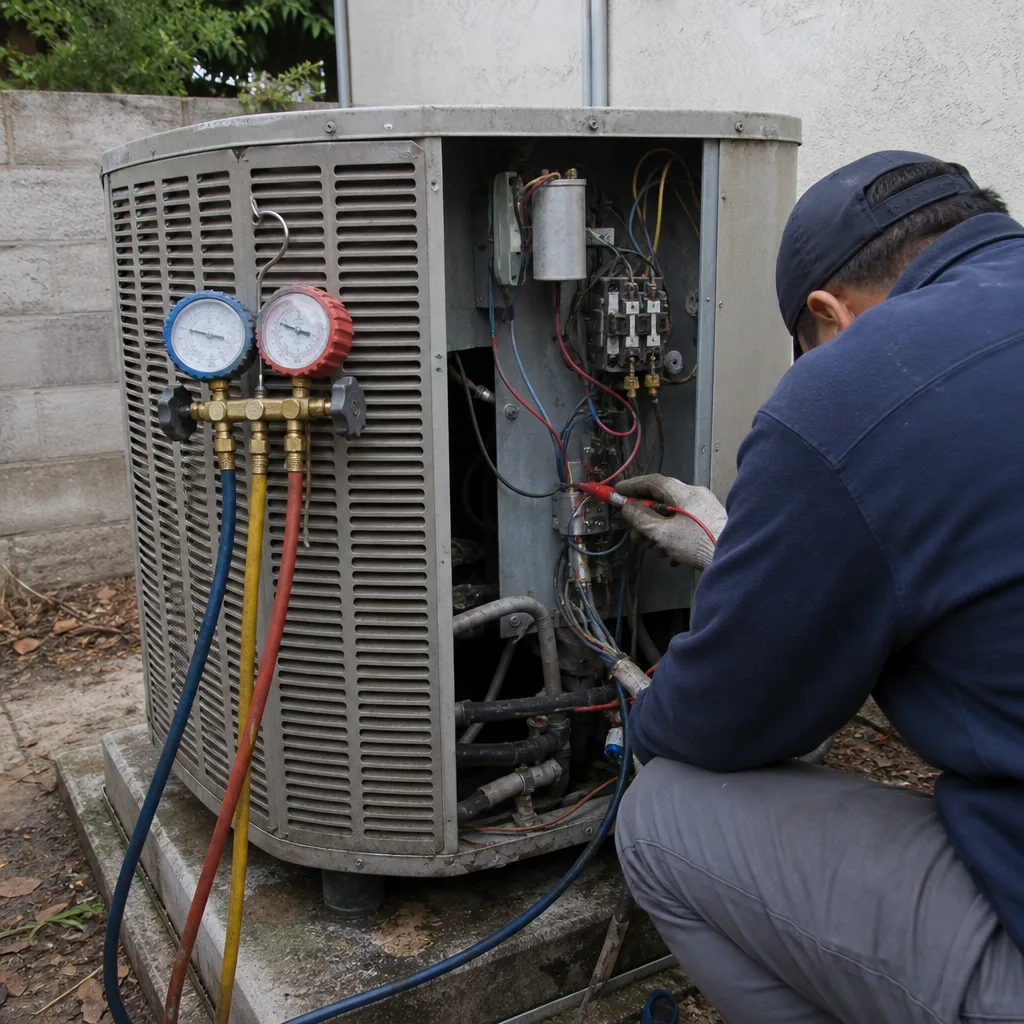 Before
 After
 Before
 After
 Before
 After
When to Call a Professional
Some items on the annual calendar are homeowner tasks: replacing filters, clearing the space around the outdoor unit, checking returns, programming the thermostat. Others belong with a technician. Any work involving refrigerant, electrical components, combustion, or the heat exchanger should not be attempted by a homeowner, no matter how confident you feel with a screwdriver. A gas furnace that isn’t firing correctly, an AC that trips the breaker, a smell of gas, a hissing refrigerant line, or a heat exchanger concern are all reasons to call rather than investigate.
For a clean start on the annual schedule, our spring service visit covers the full February checklist and the May outdoor unit cleaning in one appointment. AC Repair Inglewood offers free estimates in Inglewood – call (866) 942-9087. We answer 24/7. Fast dispatch from 7am to 7pm, Sunday through Friday. If you’re not sure whether your equipment is due, that call is worth making before the next season arrives. For a broader look at the area we serve, our Inglewood page covers the local context.
Frequently Asked Questions
February is the right month to service your AC in Inglewood – the marine layer season is just beginning and you have weeks before real cooling demand arrives. Servicing in April or May puts you behind the summer rush and misses the chance to catch a failing capacitor or low refrigerant charge before the first heat wave. Call (866) 942-9087 for an exact appointment – estimates are free.
Every one to three months for most Inglewood homes, and every 60 days or so for homes closer to the LAX corridor where particulate loads faster. Check the filter by holding it to the light – if you can’t see through it, replace it regardless of how long it’s been in. During Santa Ana air quality advisories, plan on shorter intervals than usual.
MERV 8 is the safe baseline for most residential systems in this city, and MERV 11 is a reasonable step up for homes where filtration matters more. MERV 13 is often too restrictive for systems that weren’t designed for it. If you’re considering an upgrade, have a technician confirm your system’s static pressure can handle it. Call (866) 942-9087 for an honest recommendation – we won’t push a filter rating your system can’t run well.
Because the furnace sits mostly idle through the warm months and then carries most of its annual load over a short, sharp winter window. Problems that develop quietly through the summer – a weak igniter, a failing flame sensor, a restricted filter – surface the first time the system actually works hard. December is the month to run the heat and have the furnace inspected before the first real cold snap.
Because late spring is when local vegetation and windblown debris accumulate fastest on and around the condenser, and the marine layer keeps some of it damp and stuck to the fins. A coil packed with debris runs hotter and less efficiently, which is exactly the wrong condition going into peak heat. Cleaning the outdoor unit and clearing the perimeter before May prevents a marginal system from failing in July.
Repair is usually the right answer when the furnace has service life remaining and the repair cost is a fraction of the replacement cost. Replacement makes more sense when the system has multiple failing components, the heat exchanger is compromised, or the repair approaches the cost of a new furnace. Our furnace replacement service is scoped separately from repair so you get an honest answer, not a forced upgrade. Call (866) 942-9087 for a free estimate on either path.
The Bottom Line
Seasonal HVAC care in Inglewood isn’t a spring-and-fall routine. It’s a four-point calendar: February for AC prep, before marine layer season; May for the outdoor unit cleaning; October for the Santa Ana window when filtration matters most; and December for the furnace filter and first proper heat run. Filter rating matters as much as filter frequency, and a MERV 13 filter in a system that can’t handle the pressure drop is a downgrade disguised as an upgrade. Get the calendar right and you’ll catch most failures before they happen – not on the afternoon you need the system most.
If you’d rather have the calendar handled for you, AC Repair Inglewood is one call away. Our technicians have up to 10 years of experience and work fluently across Carrier, Daikin, American Standard, Bryant, Trane, Lennox, Goodman, Rheem, and York equipment – so the technician reviewing your system already knows what they’re looking at. Call (866) 942-9087 for a free estimate. We answer 24/7. Fast dispatch from 7am to 7pm, Sunday through Friday.
Written by the team at AC Repair Inglewood.